Optical Fiber Cable Laying Projects
Optical fiber cable laying projects have been pivotal in revolutionizing global communication networks. These projects involve the installation of thin, hair-like glass or plastic fibers that transmit data as pulses of light. Over the years, they have played a crucial role in enhancing internet speed, reliability, and capacity.
In the early 2000s, numerous countries embarked on ambitious optical fiber cable projects to connect remote areas, urban centers, and even undersea cables. These initiatives aimed to bridge the digital divide and provide high-speed internet access to previously underserved regions. One notable example is the “National Broadband Plan” in the United States, which aimed to deploy fiber-optic networks across the country.
Such projects required meticulous planning, specialized equipment, and skilled technicians. Fiber-optic cables had to be buried underground, strung along utility poles, or laid under the ocean floor. The advantages were clear: faster data transmission, lower latency, and improved connectivity for businesses and individuals.
Today, optical fiber cable laying projects continue to evolve, with a focus on upgrading existing infrastructure and expanding networks to keep pace with the growing demand for data. These projects remain essential in shaping our increasingly interconnected world in a global manner.
The development procedure of optical fiber cable laying projects involves a series of well-coordinated steps to ensure the successful installation of high-speed data transmission infrastructure. Here’s an overview of the key stages:
1. Planning and Feasibility Study:
The project begins with a thorough assessment of the area to be covered, including mapping existing infrastructure, analyzing demand, and estimating costs. Feasibility studies help identify potential challenges and opportunities.
2. Design and Route Selection:
Engineers design the network layout, selecting the optimal routes for laying optical fiber cables. Factors such as terrain, population density, and existing infrastructure are considered to minimize disruption and costs.
3. Regulatory Approvals:
Obtaining the necessary permits and approvals from local authorities and regulatory bodies is crucial. Compliance with environmental, safety, and zoning regulations is a priority.
4. Cable Selection:
Choosing the right type of optical fiber cables, whether for underground, aerial, or underwater installation, is critical. Cables vary in terms of capacity, durability, and cost.
5. Installation:
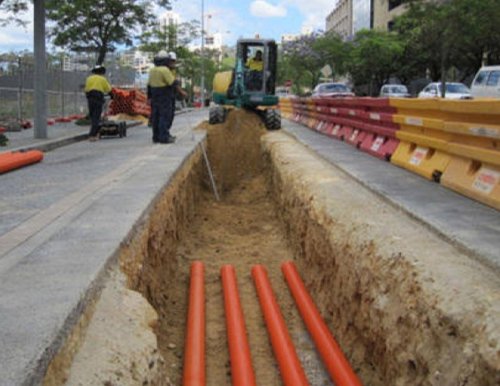
Skilled technicians deploy specialized equipment to lay the cables according to the approved design. This can involve trenching, directional drilling, or aerial installation, depending on the chosen route.
6. Testing and Quality Assurance:
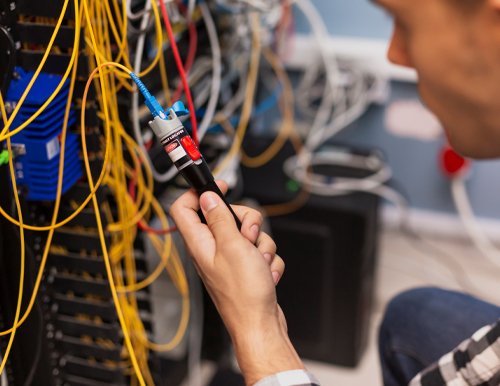
Rigorous testing ensures the optical fiber network meets performance standards. Technicians conduct optical time-domain reflectometer (OTDR) tests to pinpoint any potential issues.
7. Integration and Commissioning:
Network elements like switches, routers, and access points are integrated into the system, and the entire network is commissioned for operation.
8. Maintenance and Expansion:
Regular maintenance and monitoring of the optical fiber network are crucial to ensure uninterrupted service. Expansion and upgrades may be required to accommodate increasing data demands.
Optical fiber cable laying projects demand meticulous planning, skilled labor, and significant investment but yield substantial benefits in terms of high-speed connectivity and enhanced communication capabilities.
Fiber optics is used for long-distance and high-performance data networking. It is also commonly used in telecommunication services, such as internet, television and telephones.
” AMES UAE ” company through its Optical Fiber
Cabling (OFC) business, offers end to end solutions for all OFC related infrastructure network requirements involving Survey, Design, Supply, Installation, Testing and Commissioning of OFC based Network & Related Maintenance Services, be it Underground Cable Installations or Aerial Laying .With best – in – Class Project Management Tools, Resource Tracking Apps , Digitalization Techniques and In – house expertise.” AMES UAE” company is well equipped to provide seamless connection across the fiber infrastructure domain.